Our home is the shelter to our lives. And every little thing that we buy for ourselves, for example, a coffee mug or a shirt also takes us through hours of shortlisting and choosing. But when it comes to our own house, we don't even opt for a planner or designer. Most of us rely on the builder or contractor. In some projects, the architects do the initial plans and in reference to that the whole project is including interiors is executed without any objective or vision.
Preface of Interior designing: Chapter-1
How to buy an apartment based on Vastu compliance?
5. Grihnada Vastu ( House owner's compatibility)- Compatibility between the Nakshatra of the house owner and house, test for determining body constitution (Vata-Pitta-Kapha) of the house owner and the results based on the same - such as which bedroom is auspicious for him, etc. Suggestions based on the Job of the house owner and Ekayoni checks based on the same. etc. The matchmaking of the land horoscope and the owner's horoscope is also done for better results.
6. Antarika Vastu (Interior design )- - Results based on the placement of Cot, Chair, washbasin, fridge, AC, etc. Within each room inside the house are taken into consideration in this section. Positions and orientations based on each element inside the house are considered using Vastu principles only. The use of paint, colour selection, wallpaper shapes, etc are also depicted based on the Vastu principles.
7. Muhurtha- In Vāstu, an auspicious moment with the best Muhurta is selected for each stage of work to be started. Such a Muhurta itself gives long life to the construction. Starting work without auspicious Muhurta is just like giving treatment to a dead. One can conclude that however well the building might be constructed as per the principles of Vastu if the important Muhurta combinations are not achieved to the owner is likely to suffer the effects of bad Muhurta as enunciated and outlined. A proper Muhurta should be made use of; otherwise, the very purpose of big projects is likely to be lost. Proper muhurta must be observed so that the Vāstu constructed on such land would last long. The muhurta must be selected on astrological rather than religious considerations. While selecting a muhurta, the astrological principles rather than religious ones should be observed very carefully.
17 Lessons I learnt from the book Rich Dad Poor Dad
Rich dad and poor dad is an international bestseller written by Robert T Kiyosaki and edited by Sharon Lechter. It is based on his own life story where he mentions the learning from his two fathers. One is his own father who is a hard-working Ph.D. holder, a salaried but worried professor; The poor Dad. And the other one is his knowledge-giving source, his teacher cum financial advisor, and a businessman; The rich Dad. After reading this book I have extracted certain learned points which I am going to share below. It is totally based on my grasping ability and my way of representing the book. Hope you all put it to good use.
Financial Education or financial literacy:
1. Financial education is a major lack in the current education system. Although we dedicate our whole childhood to our conventional education methods, the main grind of adulthood to earn, manage, and grow money is not taught properly in a single book or subject.
2. Teaching about earning money and teaching about growing money are two different things. Financial education shouldn't be such that it teaches us to run for money throughout our lives. It should be such which teach you how to manage money and let money work for you. When your money with proper management and decisions increases by itself without your personal time investment, it can be said that money is working for you. This whole concept is termed financial independence.
3. Conventional lectures and blackboard classes are not the modes to teach life lessons. Life being the biggest teacher is the best course which pushes you in every moment to learn something. It may be some random skill or lesson but life chores teach it most simplistically. Therefore, practical educations with life examples along with theoretical understanding are the most genuine and the most effective form of education.
4. Conventional education is designed to teach a student to avoid mistakes. But mistakes are part of real life. People that are scared to make mistakes never grow, but schools teach you to be scared of mistakes. In life there's right and wrong, good and bad, winning and losing, success and failure. Most people want to be right, but that's not reality.
5. With proper financial education, financial independence as well as financial freedom can be achieved. Financial education should include basic accounting practices, proper investment practices, basic rules of the financial market, information related to tax, tariff, or levy. Financial independence is achieved once you take care of all these practices. But financial freedom is achieved when you get up to a stage where you are free to take the decision avoiding the number game.
Decision-making power:
6. Decision-making power is what makes people different from others. Each intersection in life street allows you to make a decision. This decision decides your future destination, will it be luxurious or abstemious is decided in that instant. So, if you don't cultivate instant decision-making power, you can't keep up in the race of making money. Your decisions will thrash you to a compromising position where you find yourself behind from what you projected and from others too.
7. There are three broad divisions based on our decision-making power (poor, middle-class, and rich). Poor and middle-class people work for money, and money works for the rich. Poor and middle-class lives are governed by fear and greed. Fear is often misused as security pushes the decisions of the poor and middle class to take the safest and secure path. Whereas calculated risks and aggressive approaches are mostly taken by rich people.
Avoiding the rat race:
8. In your childhood, your parents push you to think of getting a job and earn for your lively hood for the rest of your lives. This indirectly fuels your decisions to sell yourself to the concept of salary, job security, financial security, etc. Even the education system teaches you to follow the contemporary approach to have some and adjust with that. How a rat runs continuously in a rotating wheel powered by it tied with a slice of cheese in front of it, your life resembles the same pattern.
9. A job is a short-term solution to a long-term problem. The real intent to go to a job is to earn. When a salaried person says that he doesn't have any interest in making money, he is blatantly lying and is trying to cover up his real instinct. The salaried person confuses himself in between earning and making. This confusion leads to a path full of traps, the traps in the web of greed and fear. The greed of earning more and the fear of losing more makes him more vulnerable, fickle and stressed.
10. Every person has something which can be quantified by money and few other things which can't be quantified. If most of your things are fueled by money, you develop fear and greed. This is inherited from generation to generation until a radical and unconventional heir breaks the chain.
11. In fact, the origin of inflation, adulteration, and depression are caused due to this ever-rising trait of greed and fear in the masses. This gradually widens the gap between the rich and the poor. The downfall of many big historical civilizations was due to this rising gap only.
Distinguishing between Assets and Liabilities:
12. Asset is something that brings money to your pocket. Liability is something that takes money from your pocket. Therefore, the rich collect assets, and the poor collect liabilities. Liabilities are some form of responsibility too where you don't only spend your money but also spend your time. A rich will never invest his big chunk in buying big liabilities. In fact, having big liabilities like luxurious cars and lavish houses is never a sign of being rich. It's in the mindset that distinguishes the rich and the poor. It's the smart sensing capability to differentiate between liabilities and assets. It's the decision-making capability to acquire more assets.
13. Houses, cars, and jewelry are not termed as assets until they put money into your pocket. If a house gives you a profitable rental income, it can be termed as an asset. Asset and liability can be identified based on the cash flow. If the cash flow is inwards, it's an asset. If the cash flow is outwards, it's a liability. With proper learning and implementation, liabilities can also be converted into assets.
14. There are broadly four asset classes that are business, real estate, papers (stocks, mutual funds, and savings), commodities. Businesses or companies are the best modes of assets if properly run and managed. Robert's cash flow quadrant says there are employees, self-employed, businessmen, Investors in each corner of the world's cash flow.
15. Business and investments on paper control most of the cash flow than the other two. Real estate can be an asset if you can learn to use debt. Proper management of real estate can become some of the biggest assets a person could ever have. Papers are stocks, bonds, mutual funds, and savings. A distributed investment plan can make the papers some of the exponentially increasing assets in your account. Commodities like oil, gas, gold, etc. will not go down soon and can be some of the well-reserved assets for future growth.
Speculating inside out:
16. Asking questions to yourself, to your surrounding, to your silence, about your problems makes you improve from what you were. A question opens the mind, a statement closes the mind. Poor people often end the possibilities of solving a problem but rich people are keen to retrospect, introspect and interrogate to solve a problem. At least the rich people are accounting a probability of solving it.
17. Not speculating your current scenario is directly escaping from success. Learn about accounting, learn about your financial statement, the numbers of your income and expenditure. Make your balance statement and income statement. Dig into your assets, your liabilities and find out the best possible outcomes for the current and future scenarios.
Vastu: The profound sense of dwelling
Recapturing the long lost trend, nowadays the common sense of civilized and progressive people are recognizing the importance of houses more than that of the importance of food and clothes. It is very evident to say that a house and its making impact a person's life more in terms of time and transactions. It is being reaffirmed that among the amenities of life, a residential building not only affords a large degree of comfort and convenience but also significantly influences health, relationship, longevity, safety, and security.
Earlier in ancient times, constructing a house or any building in (Bharat) India was deeply associated with a holistic and spiritual approach. Being the hub of cultural integrity, India was developing its architectural front based on rudimentary searches and research. Vedas, Puranas, and Upanishads were encrypting many such architectural findings and principles under the rishis(sages), gurus (Teachers), sishyas (scholars), sthapatis(architects, builders, and designers) as well as silpis (carvers and workers). Apart from that, many Sahityas(literature), agamas(religious texts), itihasas(historical texts), kavyas(poems), Sangitas(songs), Natya shastras(dramas and ethology), etc. have traces of architectural material in them. These ancient Hindu architectural texts are collectively stated as Vaastu Shastra or simply Vastu. Vaastu or Vastu has come from the word 'Vas' which means living in a certain place. The literal meaning of Vastu is the place where we live or dwell. Vastu shastra has its origin from sthapatya Veda which is a crucial part of Atharvaveda. Some of the most important ancient works related to Vastu are Viswakarma Vastu Shastra, Samaragana sutradhara, Mandana Sutradhara, mayamata, silparatna etc. Agamas like suprabhedagama, karnikagama, Vaikhanasagama Maha-agamas etc. and Puranas like Agnipurana, Matsyapurana, garuda purana etc. are noticeable works of Hindu architecture.
In India, Vastu is given the utmost importance while creating a dwelling because most of the architectural magnum opuses of earlier days were created strictly following the Vastu norms and principles. Vishwakarma is considered the supreme architect and his descendants are also identified with the creation of much monumental architecture following the principles of Vastu only. Vishwakarma is credited with the craftmanship of many weapons and chariots of Gods in Hindu mythology. In Ramayana and Mahabharata, he is also identified as the planner and creator of cities like Lanka, Dwarka, and Indraprastha. Mayan or Mayasura being the son of Vishwakarma and father of Mandodari is also considered as the planner of Mayasabha(coliseum) and cities of Lanka and Dwarka too. Nala, another son of Vishwakarma was the sole architect behind the construction of Nala Setu or Ram Setu. There are also architectural texts based on Vastu for Jainism and Buddhism such as Gautamiyam, Bauddhamatam, Caitya, etc.
Manasara is a Shilpa Shastra(the science of art and crafts), written by multiple authors successively evolved over the centuries. Inside its 70 chapters and 10,000 shlokas, it has vividly described topics like the system of measurements, qualification of an architect, objects of architecture, selection of construction site, soil testing, ground plans, village planning, town planning, foundation design, column design, design of palaces, chariots, Hindu temple architecture, the structure of deities as well as Jaina and Buddhist temple design and construction, etc.
Brihat Samhita, the most specialized work of Varaha Mihira also describes any architectural principles. Brihat Samhita has 100 chapters and 3900 slokas. It talks about astrology, mathematics, architectural science, sun and its significance, planetary motion and their significance, planetary years, meetings, moon's conjunction with celestial bodies, constellation's impacts, wind and its importance, climate and seasonal changes, time and calendar, etc. Varaha Mihira was inspired by many poets (mostly by Kalidasa) and authors from whom he extracted many evident implementations. Thus the word 'Samhita' literally means amalgamation. Brihat Samhita also describes the design of Nagara-style temples built in the 6th century.
Vastu shastra has also proliferated its impression on modern architectures. The scientific and rational minds have accepted it with an open approach in the form of guidelines, scrutinized its important aspects, and extracted the benefits in their implementation. Some of the modern architectural marvels based on Vastu are as follows:
1. City planning of the city of Jaipur, Rajasthan by Rajput king Jai Singh in 1727.
2.Gandhi Smarak Sangrahalaya, Ahemedabad, Gujrat
3. Lotus temple, New Delhi by Fariborz Sahba in 1986
4.Jawahar Kala Kendra, Jaipur, Rajasthan by Charles Correa in 1986
6. City planning of Chandigarh, by Le Corbusier
7. Ram Mandir, Ayodhya, under construction, by Sompura Family started in August 2020
Suitable Vastu is derived from different parameters such as defining the location of the plot of construction based on direction and altitude, the position and movement of the Sun, the relative planetary motion, the relative motion of the moon, the direction of the wind, soil qualities of the plot, atmospheric parameters like temperature, pressure, etc., climatic and seasonal changes, specific time selection about the calenders, horoscope, and behavior of the owner/ maker/ creator or builder, flow of energies and radiation in the plot and building, magnetic fields and other invisible forces, material selection parameters, location of the source of water, etc, etc.
Vastu is based on the 5 elements principle. The 5 fundamental elements of creation are Prithvi (Earth), Jal (Water), Aakash (Space), Vaayu (Air), Agni (Fire). As we know, a living being is made up of five elements similarly the Vastu is considered to be a living being and is created out of five elements too. The effect of each element changes from direction to direction. The most effective element in the northeast direction is considered to be water, whereas the southeast direction gives more importance to the fire element. The northwest and southwest directions consider air and earth as their most effective element respectively. The astrological studies of horoscopes have also denoted different elements to different horoscopes. So, linking both the astrological insights with the Vastu Shastra, proper orientation to the site plan can be proposed.
The science of directions is used to derive a suitable site plan followed by a suitable floor plan of the building. The concept of Vastu Purusa is used here to ease the complexities of the plan. As Astrology goes with the personification of time (The Kala Purusha), similarly Vastu Shastra deals with the personification of space (The Vastu Purusa). In fact, ancient sages knew the relation between space and time. And based on their intuitive wisdom, they established a space-time personified concept to access this wisdom. In the Vastu Purusha concept, the site is divided into specific no. cells called Padas. The site plan (Pada Vinyasa) is done by planning each cell and allocating suitable functions to each dwelling cell. Every pada or cell is denoted with a certain deity bearing a certain form of energy.
Division of plot using horizontal and vertical lines into a specific number of squares. They range from 1x1 to 32 x 32. Vastu Purusha mandalas uses pada vinyasa for divisions. Different mandalas have specific no of padas based on types of pada vinyasas. The most prominent Vastu Purusa Mandalas are Chhandita Mandala(8x8) with 64 padas and Parasaayika Mandala (9x9) with 81 padas. The Manduka/ Chhandita Vastu Purusha Mandala (8x8) is mostly used for layouts of Hindu temples. The Parasaayika Mandala (9x9) is mostly used for deep value intended Residential/ commercial planning. While dividing the energies of the padas, a particular deity was represented corresponding to their energy characteristics. In the Parasaayika mandala, the normal position of the Vastu Purusha (head towards northeast and legs in the southwest) is depicted, and along with this orientation of Vastu Purusha, a total of 45 energy deities sit upon him.
While constructing a building, Vastu gives step-by-step guidelines starting from the selection of the plot or site to the finishing of exteriors and interior planning. A brief description of the steps has been given for your convenience.
1. Plot / Land selection (Bhu-Vastu):- Vastu plays a very important role in the plot selection for residential as well commercial use. The shape of the plot, the orientations, and directions of the plot, type of soil, tilt/ slant of the land, proximity of the land (landmarks such as temples near the land, roads near the land, water source near the land, etc.) help in determining the quality and fitness of the land for further construction. The soil is divided into 3 types based on its quality, viz., High (Uttama), medium (Madhyam), and low (Adhama). Further, the soil can be examined base on its taste (rasa), color (varna), touch (sparsa), smell (gandha), etc. Purification of the soil, possession of the plot, dividing the soil into grids, etc. are also included in Bhu-Vastu A land horoscope can be taken out for better understanding and implementation.
2. Division of segments or sections (Khanda Vastu)- It is more of a calculation based on different forms of division of the plot. Veethis (concentric circles) and padas (grid Square) are used to divide the plot based on the plot size. Veethi vinyasa and Pada Vinyasa are done to allocate different spaces of use based on the relevance of the segments. Marma Bindu (Vital points) are also defined while dividing the plots
3. Griha Vastu (House Design)- Based on Pada Vinyasa, Veethi vinyasa and Marma sthaan the planning of the house is done. Along with that Ayadi Shadvarga calculation is done. Six types of Ayadis are calculated ( Aaya – Income/benefits, Vyaya – Expenditure, Yoni – Direction indicating the flow of energy (Prana), Varam – Weekdays, Nakshatra – Star, Amsa – Quality/feature). Tithi, Yoga, and Ayuva are also calculated there. A proper foundation method, plinth, column, beam, roof, door, window, etc. are selected based on the type and no of stories. Starting from the footing to the roof, everything is calculated as per the Vastu principles. Direction based results for every kind of rooms, results based on obstructs (vedhs and dosas), results considering the position of well, septic tank, soak pit, water source, results for the main gate, compound wall, staircase, etc. are also calculated based on the Vastu principles.
5. Grihnada Vastu ( House owner's compatibility)- Compatibility between the Nakshatra of the house owner and house, test for determining body constitution (Vata-Pitta-Kapha) of the house owner and the results based on the same - such as which bedroom is auspicious for him, etc. Suggestions based on the Job of the house owner and Ekayoni checks based on the same. etc. The matchmaking of the land horoscope and the owner's horoscope is also done for better results.
6. Antarika Vastu (Interior design )- - Results based on the placement of Cot, Chair, washbasin, fridge, AC, etc. Within each room inside the house are taken into consideration in this section. Positions and orientations based on each element inside the house are considered using Vastu principles only. The use of paint, color selection, wallpaper shapes, etc are also depicted based on the Vastu principles.
7. Muhurtha- In Vāstu, an auspicious moment with the best Muhurta is selected for each stage of work to be started. Such a Muhurta itself gives long life to the construction. Starting work without auspicious Muhurta is just like giving treatment to a dead. One can conclude that however well the building might be constructed as per the principles of Vastu if the important Muhurta combinations are not achieved to the owner is likely to suffer the effects of bad Muhurta as enunciated and outlined. A proper Muhurta should be made use of; otherwise, the very purpose of big projects is likely to be lost. Proper muhurta must be observed so that the Vāstu constructed on such land would last long. The muhurta must be selected on astrological rather than religious considerations. While selecting a muhurta, the astrological principles rather than religious ones should be observed very carefully.
Vastu Shastra is itself a vast topic to grasp. Years of proper training and learning are required to get the essence of Vastu Shastra. To fulfill the regularity of the format a conclusion is needed to be drawn. And after reading this blog you might have got the gist of the topic. Vastu shastra is indeed a profound sense of dwelling and must be taken into account while building or buying a house, planning a village or city, planning of landscapes, planning of commercial as well as residential buildings, and many more.
Future is booking tickets to Space.
Briefly saying, the future of space tourism is looking brighter than ever before. After privatizing the space exploration process, many big companies are putting a big chunk of their resources into the research and development of new modes of space transportation. In the 2020s we will be seeing the commercialization of suborbital space travel. It may so that we can buy a ticket to space just for recreation or it may be a hypersonic journey in a spaceliner to jump from one city to another. And there is a huge chance that orbital space exploration may boom. Perhaps there might be some space hotels (space stations basically) where we can book a 2 nights, 3days holiday (Although there won't be nights or days as it is in the earth's crust). The late 2020s might also gift us the endeavor to go beyond the earth's orbit. Lunar tourism is one of the big things endorsed by Musk in these recent years. Eventually, we can be interplanetary species after completing a mission to mars and the followingly ascending towards the mars tourism programs. In the coming 50 years or so, we can definitely see some huge leaps to different space boundaries. Habitation and colonization at different planets and natural satellites may become real too.
References:
1. Articles from NASA, SpaceX, Blue Origin, Virgin Galactic, Boeing, etc.
2. Wikipedia
3. Science Direct
4. Revfine
The future of TV in the 21st Century: Schematics of early television (part-1)
Without falling into the trap of finding the original father of an invention, I would say every invention has multiple contributors i.e. just like having multiple fathers and sometimes multiple mothers too. So is the modern world television case, which with its debut forced us to rearrange our living areas into an entertainment cynosure.
Often J.L Baird is considered as the man behind televisions but the word television itself was coined many years ago by someone who was tele away from the original inventors. Prof. Constantin Perisky first coined the term Television in 1900 taking Tele (Far) from the Greek origin and Visio (sight) from the Latin origin, combining them into a new word that later largely magnified the broadcasting and entertainment industries.
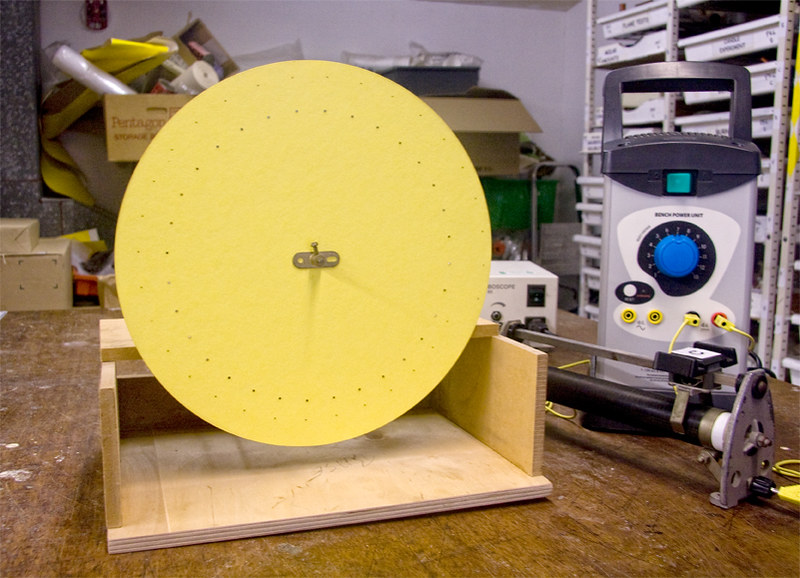
Since then many scientists have worked parallelly as well as successively in the building of 20th-century television. Starting from the idea of photoconductivity to discovering the increased conductivity of Selenium when exposed to light by Willoughby Smith in 1873, the initial bits of television were building up steadily. The invention of the Nipkow spiral hole disk by P.J.G. Nipkow in 1884 became the driving wheel of mechanical televisions. With Nipkow's invention, the transmission of still imagery through the telegraph wire system became very easy for Henry Sutton. In 1885, he designed a device called Telephane which used Nipkows disk, selenium cells, Nicol prism, and Kerr cell. But the telegraph wires were not that efficient to transmit the then-going Melbourne cup successfully. Later the live transmission of images was effectively demonstrated in 1909 by Ernst Walter Ruhmer. This inspired another duo, George Rignoux, and A. Fournier to subsequently transmit live images using a similar kind of arrangement.
Parallelly, a new concept was being developed by Carl Ferdinand Braun. He invented the first Cathode ray tube inspired by the Crookes tube, which was previously inspired by the Geissler tubes, in the same year (1897) when J.J Thompson discovered the Electron. Braun was the first to use it as a display device. 1906 brought two more germans Max Deikman and Gustav Glaze to portray raster images for the 1st time in CRT. In 1907 a Russian Scientist named Boris Rosing used CRT to display simple geometrical shapes. Later in 1911 Rosing reused the CRT to display his subordinate Vladimir K. Zworkin's words "Very crude image" using a mechanical mirror type drum scanner. However, the selenium photoresistors used were inefficient to sense the changes of different intensities of light while trying to portray a moving image.
It remained undone unless a poor and dwindling scientific tinkerer with some household spares and parts bought from departmental store started building one of the world's first mechanical television. In 1923, Scottish Scientist John Logie Baird attempted the 1st trial to run a mechanical television using the same Nipkows Disk idea and he became successful. In 1925 he publically demonstrated moving silhouette images using a ventriloquist's dummy named "Stooky bill". Moving Stooky bill had high contrast paint on its face making it a suitable subject for proper detection. Baird's analog television system used a transmitter and a receiver. For both scanning in the transmitting end and displaying in receiving end, he used two giant Nipkows disks. The brightly illuminated dummy placed in front of the disk with a properly positioned set of lenses was used to scan the image across a static thallium sulfide photocell, which was transmitted through AM radio signals to the receiving unit. The receiving end had a second disc properly placed in front of a neon light. The light was varying in proportion to the brightness and contrast of each spot of the image. And due to the rotation, the spiral of 30 holes in his disc was producing 30 scanned lines, just enough to recognize the dummy. Later he did it with a human face. In the later phases of the 1920s, he also introduced the first transmission of moving images with tonal graduation, the first long distant TV signal transmission (705 km) using telephone lines, the first color transmission using 3 spiral discs with RYB color filters, & 3 light sources with the alternating commutator and the first transatlantic television transmission from London to Newyork.
In this period, he also became the first person to mass-produce television (receiver) also called televisor made by the electric company Plessy, England. A thousand pieces of these television receivers were produced and sold. These receivers used parts comprising of motors with synchronous gears assembly, set of lenses, lens box assembly with viewing tunnel, neon lamp with holder, discs (Nipkows), spindle assembly, control knobs, condenser, terminal board, resistance with brackets, and the casings. It was also sold in the form of a kit to be assembled by the consumer. [Refer Manual]
Many of his contemporaries tried their hands with similar kinds of technological advancements but were not as impactful as Baird's huge leaps until... [To be continued]
Summary:
In this blog, we have learned how different parts of the television were built by different personalities and it finally came to shape in a mechanical and later in an electromechanical form. The invention of photoconductive selenium cells, Nipkows disc, Nicols prism, Kerr cells, mirror type drum scanner, etc. eventually led to the invention of the mechanical television. In the next part of the blog, we will know how the fully electronic television was built using the CRT which became the revolution in the late 20th Century. Stay tuned!
References:-
1. http://www.earlytelevision.org/search.html
2. https://en.wikipedia.org/wiki/John_Logie_Baird
3. https://www.bairdtelevision.com/main.html